

Digital, hybrid, or in the office? What is the best place for a meeting?
Whether I’m developing communication strategies with clients or redesigning an office space, the question of where to hold meetings is fundamental. Here are a few basics to serve as a guide—by no means exhaustive, of course… 😉
The most important question:
What is the purpose of the meeting?
Only when I am clear about the goal of the meeting can I choose the right format and the right location.
1. What is the goal of the meeting? 🎯
- If the meeting is solely for sharing information, you usually don’t need a meeting at all. Use an asynchronous tool like Slack, Teams, or email so everyone can read it whenever it suits them best.
- Is it about an emotional topic 🤍 (e.g., a project close to your heart, open feedback, etc.)? Use a format that is as synchronous as possible, ideally a live meeting. In the office, choose an atmosphere that encourages openness—something cozy is better than a sterile conference table.
- Is it about brainstorming? This depends on the team and their skills: for some, it works wonderfully digitally (preparation and the right tools are key! 🚀); in the office, use bright, large, inspiring rooms with a view. If it’s just the two of you and you don’t need a computer: go for a walk. 🌳
- As soon as it gets tactile, don’t even try to do it digitally. Do you need to choose colours or materials? Look at prints or branded products? I’ve tried many things here, and nothing beats meeting in person! 😅
- Presentations work best today both digitally and live. For digital meetings, it is crucial to remember: if you want to be persuasive and connect during a presentation, you need eye contact! 👀 Your audience needs to feel it, so look directly into the camera during your presentation, not at the screen (this takes a little practice; a sticky note with an arrow pointing to the camera lens can work wonders 😉)
2. Meeting frequency 📅
- Daily Check-ins A daily check-in is usually best handled on asynchronous platforms like Teams, Slack, or similar. This saves resources and offers more flexibility. Having the autonomy to decide when and in how much detail to read check-ins is highly valuable.
- Weeklies It is important for the team to "see" each other once a week, so the weekly meeting should be digital or hybrid, not asynchronous. Depending on your hybrid strategy, you might combine it with a team day in the office, perhaps at the coffee point, a high table, or an arena... As mentioned, it depends on your hybrid strategy.
- Project meetings/Jour Fixe The key here is to ask what the goal is and decide based on that.
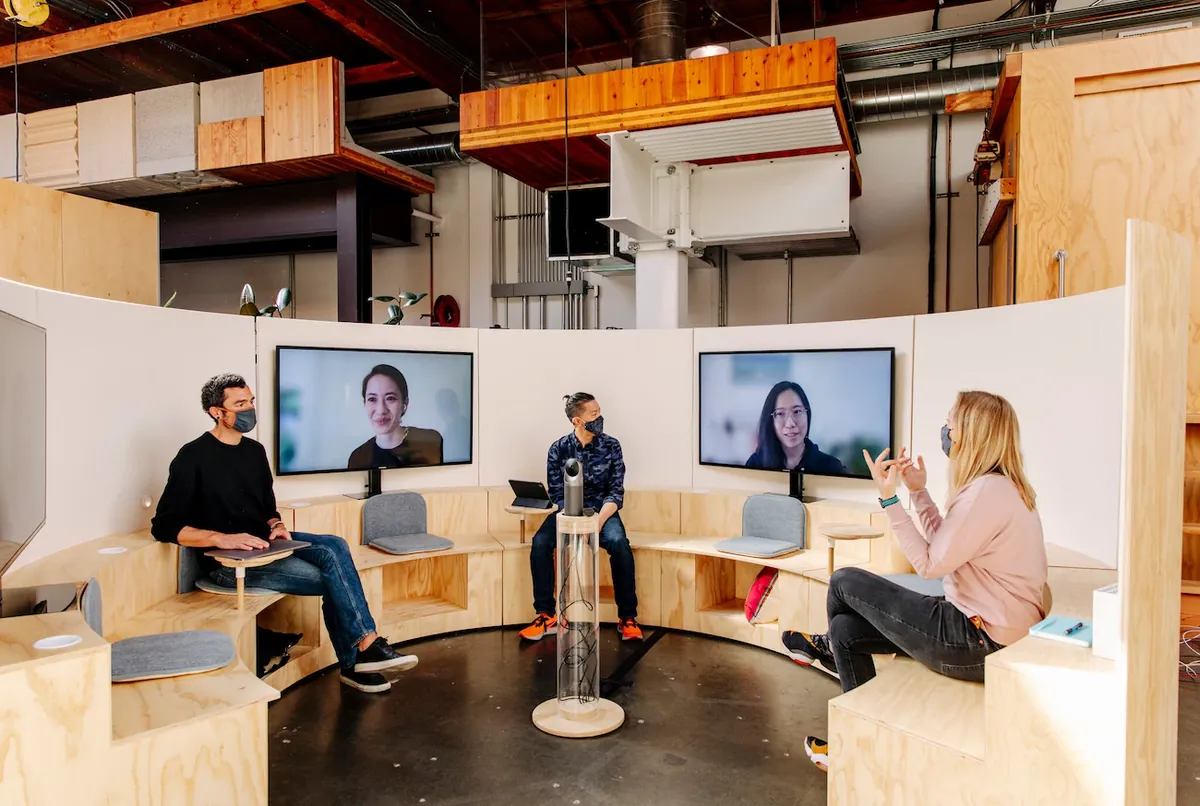
3. Hybrid meetings 🖥️
So, when should you choose a hybrid meeting?
👉 When it cannot be avoided. 😂
👉 When you need quick access to someone who is not on-site.
👉 When the goal is information sharing, or when specific individuals are primarily there to listen.
And when should I avoid hybrid meetings?
❌ When the goal is equal, active participation in a workshop or a meeting where you are collaborating and developing ideas together.
❌ When dealing with emotional topics (performance reviews, presenting new ideas, etc.)
Hybrid meetings work if it is just about "listening in," but in those cases, you often don't need a meeting at all and can handle it asynchronously.
Otherwise, the rule is:
💰 Invest in functional tools and in learning how to use them:
👉 Screens that are large enough to show participants in life-size
👉 Click-and-play technology
👉 Screens exactly where I need them (e.g., using mobile solutions on wheels)
👉 Meeting rooms equipped for hybrid collaboration (screens on the long wall, V-shaped tables, campfire setups, or similar)
4. Hybrid or all-digital, even when some colleagues are on-site?
For a while, meetings where not everyone was present were held entirely digitally to ensure everyone had an equal footing.
I would base this decision heavily on the goal and the context: If equal, active participation is the priority, it is easier when everyone joins digitally, as this allows for the shared use of digital tools. Otherwise, I recommend holding hybrid meetings (e.g., for weeklies or recurring check-ins), as the colleagues on-site can at least benefit from the advantages of being together (body language, etc.), which you would otherwise partially lose.
5. Walking meetings 🚶
We are 350% more creative when walking than when sitting. At the same time, being in nature helps reduce stress hormones. Whenever possible, try taking a conversation outside and going for a walk together.
Of course, this is only feasible if you don't need a computer or screen and, ideally, if there are only two of you. But honestly, these situations come up all the time. Even some phone calls are perfect for this—just be sure to use noise cancellation so the person on the other end doesn't have to endure annoying background noise like wind or traffic.
💡 The most important thing? ask yourselves about the goal of the meeting and prioritize what matters most; this will quickly make it clear which format is best suited.
And as always: Experience is the best teacher, because every company is different.