

Work changes spaces, space changes work
Did you know that, according to Archilyse, there are clear statistical correlations between the floor plan of an flat and the likelihood of domestic violence? Or between exposure to daylight and cognitive performance in children? But let’s start at the beginning.
Digitalization and the decoupling of work from location have changed today's office requirements. In the future, 73 percent of teams will work in a hybrid model, leading to an increase in satellite offices as alternative workspaces around the headquarters. Company identification often suffers as a result. The tasks the office performs today are significantly different from those of ten years ago. We no longer "go to work"; work is where we are. How we work changes the space we need.
Spaces change work and vice versa
Conversely, the space that surrounds us changes how we work. Everyone can likely relate to the feeling of switching off when walking in the woods. This is because our body reacts to the surrounding nature and lowers cortisol and adrenaline levels—our two stress hormones—more significantly in women than in men, by the way. We relax, and our concentration and performance increase. This also works with associations with nature, such as plenty of greenery, natural materials, etc.
We are constantly interacting with our environment through our senses and processing its signals. We can reduce "task-hopping," increase concentration and creativity, provoke chance encounters, and improve communication—if we understand and utilize the impact of space.
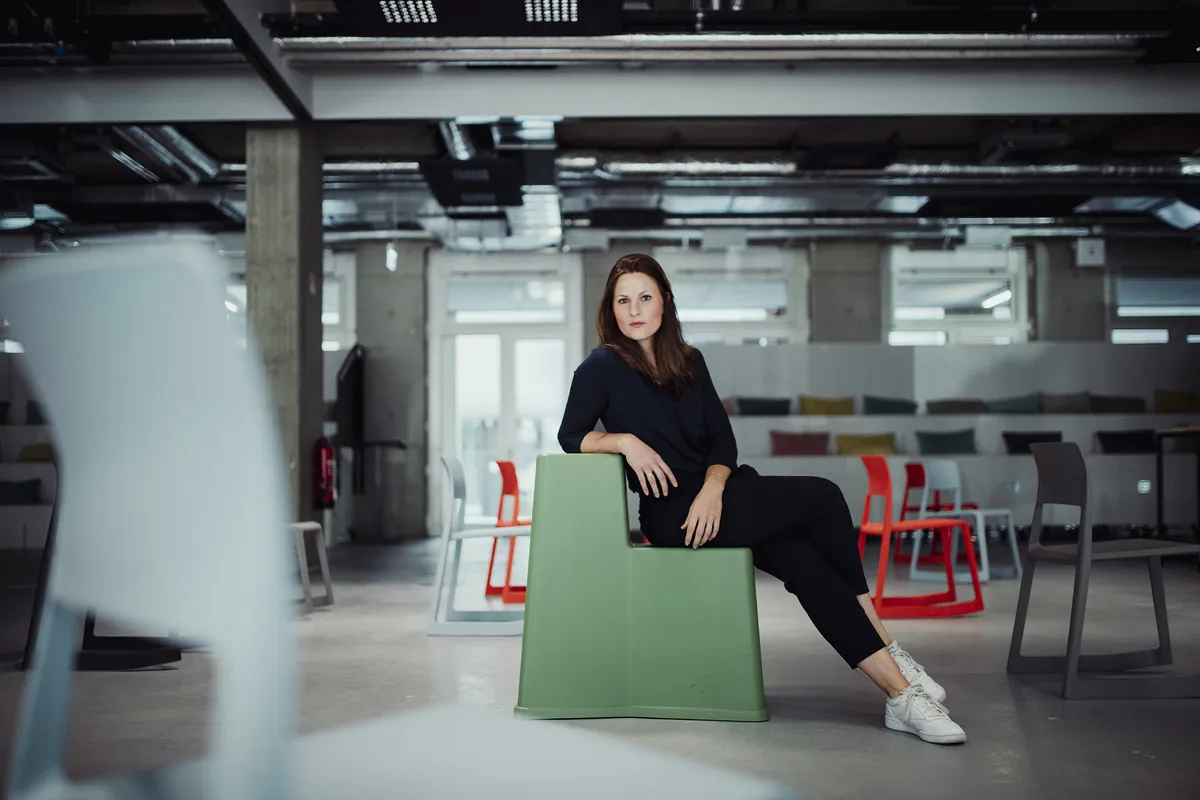
We have all heard that movement stimulates our creativity. In fact, we are 400 percent more creative when we walk instead of tackling tasks while sitting. This refers not only to the quantity but also to the quality of ideas. Even simple things like moving a curtain or furniture, or using dynamic seating, are enough to trigger this effect.
"We can foster a team's success through the psychological aspects of the work environment."
And yet, we so often fall into the habit of meeting in a conference room or on a video call, which we naturally attend while sitting. Why don't we make better use of this natural predisposition? I know many "beautiful" offices where the focus is on identification and well-being. These are two important aspects, but space can do more.
Imagine holding a meeting in a classic conference room. Now imagine the same meeting, but you are standing at a high table. Or you are sitting in a lounge. The three meetings will take very different courses. What is your goal for this meeting? What atmosphere is conducive to achieving that goal? Choose your setting wisely; it can support you in reaching your objective.
Using the impact of space positively
This only works if you are aware of these effects. Which brings us back to the big topic of "empowerment" for employees: learn to operate and use your tools—including the office. Due to the decoupling of work from location, the office has faced competition in recent years. And that is a good thing, because competition forces us to question the status quo, which is the driving force of progress. That is exactly what is happening right now: we are questioning the utility of the office as we know it and asking about the role of space in hybrid times. The office must therefore offer more than just a place to work.
It must serve as a place for learning and experience, as lifelong learning is the core competency of the future. At the same time, it must strengthen rituals and team building and help us do better work. The latter aspect receives far too little attention, even though it is so powerful—remember the correlation between floor plans and domestic violence? This is therefore an appeal for greater awareness of the correlation between space and work.
As Churchill said, "First we shape our buildings, thereafter our buildings shape us." Let us consciously create more spaces with which we actively shape our way of working. Because later, our spaces will shape how we work. And let’s make sure that happens on our terms.
👉 To the column onOfficeRoxx